Episode Transcript
[00:00:00] Speaker A: Welcome to Business Steps Up, a presentation of Hiali, one of the recognized voices in Long island business. We'll focus on cutting edge topics important to the bi county region and beyond. So sit back, relax and listen to some of Long Island's most influential business leaders here on Business Steps Up.
[00:00:19] Speaker B: Hiali Business Steps up began through Covid really looking at not only the people inside the Long Island Innovation park, but outside the Long Island Innovation park that would do exceptional things.
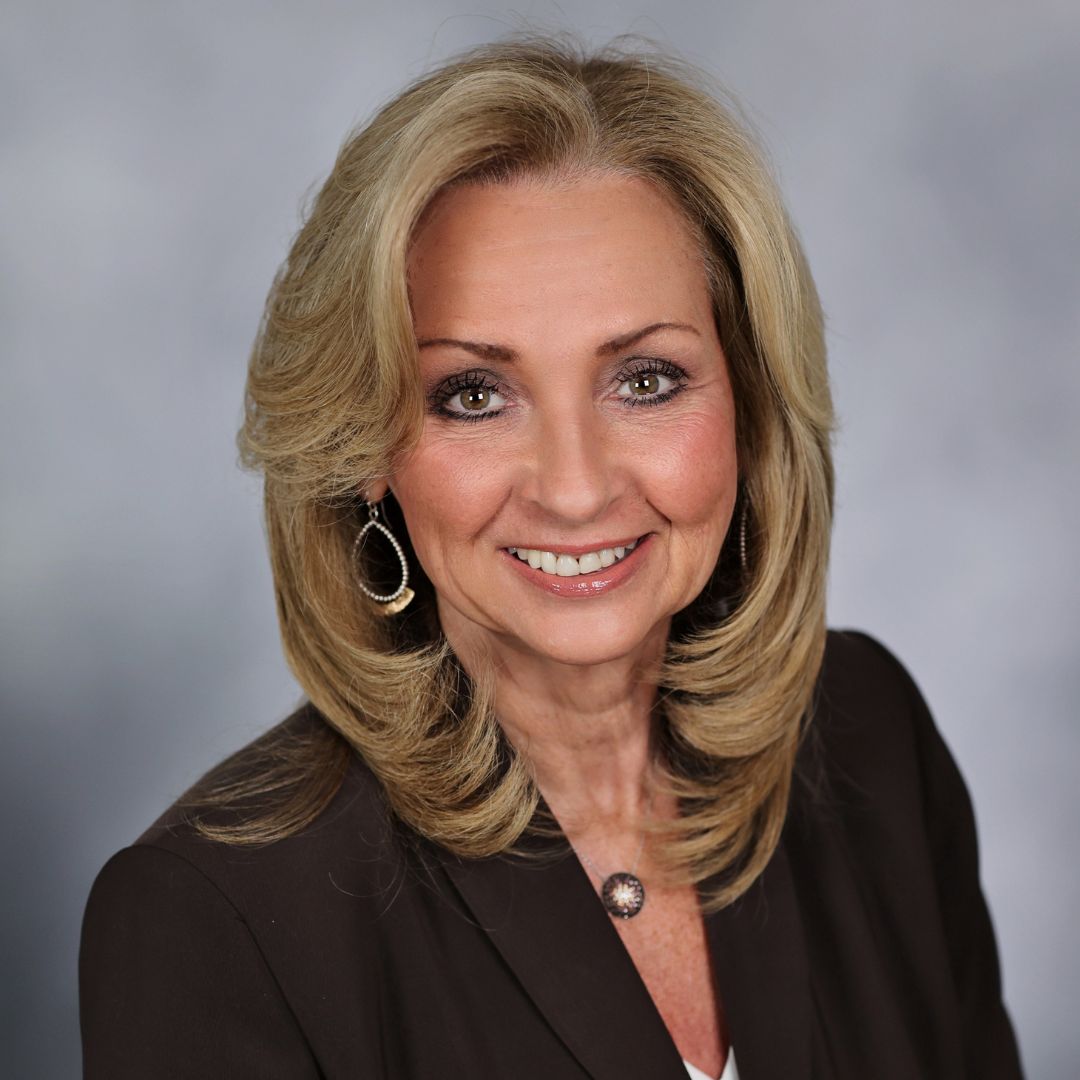
This series has become wildly successful and we've decided to keep it. We're very excited today to have Stu Almer. He is the president and CEO of Gerwin Healthcare System. Let me tell you why I'm. I'm even more excited because right before we get on had a power outage, an Internet outage actually, so. And we're a backup. So. So we're very excited about that. If we have any technical difficulties through this next half hour, please just chat us and just say you can't hear us, we'll repeat something and I'm sure it'll all work out. So welcome. Stu.
[00:01:13] Speaker C: Hi, Terry. Nice to see you again here today.
[00:01:15] Speaker B: Great to see you as well.
And I should also open and say that Garouin Health Systems has been not only a very valued member of ours, but a great partner of ours through the year and they do some great work. So we'll find out a little bit more about not only Stu and what Irwin is doing, but what's happening with the demographics right now on Long island, what he's seeing from his expert opinion. So let's start, Stu, and tell us a little bit about how you got involved in this type of healthcare business and what that looks like.
[00:01:54] Speaker C: Thanks, Terry. So I've always had an interest in helping others. That's just something inbred with me from, from the very beginning.
And as I began to grow in my career, I was really inspired to do something that allows me to help others.
I've always had a fondness for the elderly. Therefore I'm in that. In that space with an opportunity to provide dignity, compassion and to focus on quality for individuals. Now it goes beyond just studying health administration but really being able to help others.
[00:02:29] Speaker B: Great. I mean, was there. Did you find there was a defining moment in your career that you said to yourself, I'm just to consciously make this shift?
[00:02:39] Speaker C: There was, I had an interest, I thought as a professional to be a social worker. What better way to help individuals without being a direct care provider but to provide supports.
And so I began to pursue that as a career. But Then I realized early on I saw what I thought was leadership ability within myself.
And so I began to pursue at least the educational interest in. In management, in leadership, because I felt blending the two together would allow me potentially to do more for people, for the greater good than just one on one. And thankfully today I can say I'm in that position, that I'm very fortunate to be able to influence the care and health of many.
And by the way, not just residents. We care for staff, for families, the greater community. People who have need assistance have needs. You know, we can help them as well.
[00:03:40] Speaker B: Yeah. So you know what, it's interesting. I don't know if I ever mentioned to you, my dad is 90 and my mother's 91.
And so I'm living through. This is why this topic obviously interests me so much. I'm living through this right now. Taking care of in the elder care piece. And wow, I don't have to tell you how challenging it is, number one. And, you know, I know that one of the things we're seeing, the demographics on Long island is, you know, the people that are kind of 65 and plus, that's a growing demographic. So talk to us a little bit about, because of that demographic, why there's such an urgent need right now to kind of step up to the plate and do something different about it.
[00:04:28] Speaker C: Yeah. Well, I'll first say that I can appreciate where you're coming from, taking care of elderly parents. I've been there. And even though I might work in this arena, there's nothing like having to experience it yourself and appreciate what goes into this and the needs that you have. So I will say that helped ground me even further in my experience because I could even better relate to individuals. But on Long island, the 65 plus population has grown 25% over the past 10 years. I mean, that's significant. We've all heard about the Silver tsunami, the advancing aging population.
We, however, at Gerwin, have developed as your familiar Terry, what's called a life plan community.
So we plan for this wave of the aging population.
So we have independent housing on our campus known as Fountain Gate Gardens, where individuals can really buy into the whole system of care that we provide.
But it's important that everyone, you know, embrace this and look to help others because the family strain, and again, you can relate to the family strain and, you know, the need for services. Too often, you know, families need to help a loved one and they're not sure which direction to go, what options exist for that.
And there are options available Tremendous Education, of course, is always needed.
[00:05:54] Speaker B: Yeah. So, you know, I'm living through it. You know, I'm so hypersensitive to have that. Businesses and business leaders, just in terms of not only the emotional toll, but, you know, the time that has to be taken. Right. To do the right thing and care from whether it's our parents. Parents or somebody who's elderly. So talk a little bit about that, the impact that you see on businesses and business leaders in particular.
[00:06:25] Speaker C: Well, whether we realize it or not, we will all need services at some point. Us, individuals, business leaders, our staff.
Our staff in all business leaders are often caregivers. They're taking someone care of someone at home and they have the strain of that. So. So we have to be flexible with our staff. We have to provide support services.
We have to deal with issues of absenteeism and stress more than ever as we age, the workforce is aging as well. For example, we know in the published literature that the average nurse is now 55 years old, start to have health needs older. So, you know, we experience that. So I think being tuned into that and being able to have supports for staff is important for every industry.
[00:07:21] Speaker B: Yeah. And you know, it's interesting, again, as I go through it and the people I talk to, it has amazed me how many people, particularly on Long island, are going through exactly the same thing.
Right, exactly.
[00:07:35] Speaker C: I'll see.
[00:07:36] Speaker B: Because of the aging population.
[00:07:38] Speaker C: I mean, I'll tell you, we and myself too, receive calls on a daily basis. Someone needs guidance. They may never even be in our region or come here for services, but they just don't know where to go, what options exist.
So much education.
And it's interesting, you know, the life plan community concept that we have. There are only 13 of us in New York state. It's not a popular concept, unfortunately. Unfortunately in New York. But it's a solution because people then can age in place.
We can say with proof that in the four years that our program is open, that we've seen many individuals graduate over to a higher level of care, whether they need to go to assisted living care or to a nursing home.
And so we'd love to see that because we just know that it works.
[00:08:29] Speaker B: Yeah.
So, you know, on that, just for a second, you know, I know, and I know you're very proud of this, that Gerwin has a five star rating, which is beautiful. Right.
Can you talk to us a little bit about what that looks like and the services that you offer? And let me just say a bit of a commercial for Gerwin. When we were there, you had hosted us for an event. And I remember walking out thinking, well, this is the type, genuinely, this is the type of place that I would feel really good about growing older because it was beautiful and the food was eloquent and you just. There was just such care in every area. So talk to the audience a little bit about that.
[00:09:16] Speaker C: Well, I have to comment first about five star because you just hit on a very current subject, for example, less than 20, 24 hours and I'll explain.
So we have always proudly been a five star facility in terms of the quality component of five star. Quality is key to everything that we do. But just yesterday afternoon we achieved overall five star status in the Gerwin Center. So there's a lot of celebrating going on here today around campus.
I want to mention it because it's important celebrate this. You know, we have great staff, we want to provide great care. And to be acknowledged this way is just wonderful timing to do this today. But memory care is a key aspect of our, of our business, if we can call it a business. We know that in the published literature, roughly 60% of the individuals in a nursing home have Alzheimer's or dementia and have memory care needs.
So it's not a niche anymore because most everyone does memory care.
But it's a necessity. But not just a necessity. It needs to be done well. And if done well and done correctly, you can really be successful in keeping people calm, stable and improve their overall health.
So as an example, in two of our facilities here on our comma campus, we have memory care units. They are dedicated, secure units so people are safe.
So if you have the right staff, no question, the right training and very specialized training, it's not complicated, but the training is key.
And the right physical environment, the right supports in place, memory care can be done and be done very, very well and really be calming and really ease any tension throughout our entire facility, this rising Alzheimer's and dementia. So it's important we're all doing this, but again, it's important we do it well.
I will share with you. I think you're aware we have now two immersion rooms. We had opened up what's called an immersion room couple of years ago. This is a virtual reality experience where someone comes into a beautiful area, decorated park like, and you go into the actual room and you are really immersed electronically to really view a throwback in time. It could be, you know, going to the zoo as a child or going to the ballpark for the baseball game, or eating in the Italian restaurant, or riding the roller coaster.
I mean, there are many nuances to the immersion room. And we are just completed our second one in our assisted living facility and we're somewhat pioneering in this particular regard. But it works. It works for memory care. If we have someone who's maybe very, very anxious and we know that they. What they enjoyed as a child or as a younger person, we can immerse them in that and immediately be calming. And we know our residents, we know about their history. It's important for us good care to know about their likes, their dislikes. And so if we have that, it makes the immersive experience just so meaningful.
It truly works.
[00:12:44] Speaker B: Yeah. My grandmother unfortunately had Alzheimer's many years ago. And I remember she would always just even personally go back to a very childlike, you know, those experiences she remembered and really struggled with the current. What. You know, I'm just curious with. When you talk about dementia and Alzheimer's, why do you think, have they done studies on why it's on the rise at all?
[00:13:10] Speaker C: Well, just naturally, because of the aging population, right?
[00:13:14] Speaker B: Yeah.
[00:13:15] Speaker C: Average age 30, 40 years ago. You know, the average age is every year, you know, life expectancy increases, and that's why we're seeing that more. You know, it's really.
It's been changes in pharmaceuticals and medication management that's helping people to manage illnesses and why we're also living longer and therefore, at some point, you know, dementia is more prevalent.
[00:13:41] Speaker B: Yeah, yeah, absolutely.
So let's talk a little bit about, you know, the. The housing, the infrastructure, what that needs to look like, and some of the challenges that going on with healthcare facilities in general, but certainly in this area. And let me just say that I have to give kudos to very specifically the town of Smith, who Ed Wareheim and his group have really focused in the area of developing, just in general, a lot of apartments for 55 plus and over.
And they understand how important that is equally as important in building apartments for young professionals. Right. So let's talk about the infrastructure. Is housing and facilities for seniors. Is there enough?
If not, why just talk a little bit about that?
[00:14:42] Speaker C: There's not enough and it's not happening fast enough. But even more so when it goes back to something I said earlier, it's having the right housing, the right options that are available. One thing we find in our. In what we do in our space is the issue of isolation.
We know that older adults do better when they're around other people.
And many of the settings that exist don't allow for the socialization.
Just as an example, our independent living community here is an older adult. The folks who come into our independent living community on average upon entry are 82 years of age. So they're an older adult.
They want to be amongst others. They want to have the socialization.
There are too many people who, you know, will sit at home, they might be in front of a tv, they might have an aid at home. They're not engaging with other people. They might be in an apartment, not have a clubhouse. And so we know the socialization works. I mean, there are proven studies on this, so we've tried to address it. So it's, it's. Yes, there's a shortage, but there's definitely a shortage of the right type of sex setting that. That exists.
Yeah, I remember we don't want to tell. We don't want to see anybody also at home and being unsafe either.
[00:15:58] Speaker B: Yeah, yeah, yeah, yeah, absolutely. I mean, I remember from Berman Real Estate had written something about what's going on with the zoning now. Why is only, you think, so difficult in this area for senior housing, senior living?
[00:16:16] Speaker C: I think just the natural regulatory nature that we all face just seems to worsen over time.
New York State's a tough state. You know, when we have to embark on a significant project, there are so many levels of approval, whether it be town, county, state, getting the system to turn and turn quick enough to address the needs that we have is quite time consuming. So I understand where, you know, where Scott would be coming from. We've had to deal with that as well. There's so many layers, and when there are delays, you know, there's a carrying cost for that. You know, when we plan a project, we want to be able to get a project opened and operating as soon as possible. Imagine we built our independent living community. We couldn't help the timing. We couldn't plan this better. But it was during the worst of COVID and we had to build 129 units, three buildings, and we got it all done in a year and a half, which I'm very proud of. It seemed like forever we were going through it, but in retrospect, a year and a half was, was pretty, was pretty good.
But, you know, the need is there and, and it was obvious that it works once we're able to own and operate.
So I think it's just the challenges of the regulatory climate. And I'll say it again, New York is tough.
[00:17:35] Speaker B: Yeah, yeah. And I, and I will say that we as a business organization and many of our value partners are understand that and are Attempting to work at it. You know, what do you, what do you think?
If you had a magic wand, what do you think that needs to change with some of those regulatory systems? Just in terms of regulatory reform, what would make it easier to be able to get through this?
[00:18:00] Speaker C: I'm a big believer in any industry.
It's about leadership, it's about organization, and everything filters down from the top and it's a matter of who's watching.
I could tell you because of the business that I'm in here, when a piece of legislation is coming out, an idea is put out, I can tell you right away pretty comfortably and confidently if something is going to work or not and why not.
So I've always been a big advocate. I've said very often we want to have a proper seat at the table so we could comment on what may work or may not work. And too often I'm just, maybe I'm just talking in general about processes. You know, we don't always involve fully enough people who really are on the front lines who know what might work and not work. Doesn't mean I'm always correct, but I have a good sense of what will work and not work.
So I spend a lot of my time in my leadership role here on various boards, on associations. I'm very big, you know, with advocacy because I want that seat at the table. You know, like I'm doing this today and being very often in the media spotlight, it's really to shine a light that we're important. And this industry, the long term care industry, this is a rough time.
It's never been more rough for this industry.
So I'm advocating every day. We're in a good place here.
But I worry about my brothers and sisters doing this and surviving in this industry. We're a nonprofit organization. We have seven companies. We're all nonprofit. It's very tough operating as a nonprofit in an ever increasing for profit world.
[00:19:40] Speaker B: Yeah, definitely. And kudos to you, Stu, because I think obviously you understand how critically important it is to have a voice and as you said, a seat at the table. Right. Because if New York State or anyone else is not listening to.
Right. What are some of the challenges and the big critical challenges that are going on not only in health care but in a lot of different industries. There's no reform. So good for you that you push for a seat at the table. That's important.
Talk to us a little bit about. You talked about challenges for non profits.
How you seeing fund streams change?
[00:20:24] Speaker C: Well, we're seeing right now More sales and closures of nursing homes on the non profit side.
[00:20:35] Speaker B: Right.
[00:20:36] Speaker C: So, and that's a concern. They've been leaving about eight nonprofit nursing home closures in the last two years and more coming down the pike.
You're talking about Long island everywhere in New York State and other states, but definitely on Long island this is a problem.
So, and I'm aware, you know, some that are in process, but when this happens or reimbursement is not sufficient, you see backups in the hospitals. The hospitals are a key partner for our business.
We see ERs, emergency rooms overflowing.
It's gotten to a point that reimbursement is so lacking for Medicaid per patient per day that when someone goes to a nursing home and they're receiving short term rehabilitation and they now need to live permanently in a nursing home, facilities are often reluctant to keep them to convert over to long term care because they're going to begin to lose $100 per day on Medicaid or more.
That's how far the gap is from cost to reimbursement. In some areas of New York state it's about $150 a day gap cost reimbursement.
So we've been fighting as an industry very hard.
I've never been more hopeful than this budget season as to what may be coming to help hospitals and nursing homes. At least what's on the table in total dollars.
But until we see how this actually resolves, we don't know will it be enough to solve the 20 year lack in funding? I'm sure not. But we need a big step in the right, right direction or these closures and sales are going to continue.
[00:22:23] Speaker B: Yeah, yeah.
You know, it's interesting. I think the other piece to that, and you alluded to it is my dad unfortunately just got out of, well, fortunately just got out of the hospital. There's the good news. But you know, I felt so badly, so short staffed force shortage, that it's almost impossible to give the right care and attention to each patient.
Talk about that. You see it straight on about workforce shortage. Right. In healthcare. So what are you seeing in general and how is it impacting a facility like yours?
[00:23:07] Speaker C: So I can comfortably say that in the past two to three years I have spent most of my time on the issue of recruitment and even more important, retention of staff because it takes a lot of people to help run an organization like this.
The greatest number of persons, person types or professional types that we employ are home health aides and certified nursing assistants or CNAs.
It takes a lot to run an organization like this.
So we really ratcheted down. We came up with a benefits package that is designed to keep people.
We do so much for our staff on a grassroots left effort. I could do the whole show with you on this subject alone because it's made a different difference for us. You know, during the COVID years, we all had in this industry, we had a turnover rate over 50%, meaning in a year half our staff is turning over more. We're a high turnover industry anyway.
We're often down in the 20 percentile range of turnover. Done a great, great job. Because if we have very little turnover and we don't have to focus as much on the recruitment, we're always going to be recruiting.
So I'm pleased with what we've done, but, you know, we need to do that because we don't want to have staff burnout.
But where we've made a big difference, and I'm happy to share a little bit, is we have a special relationship with all the universities and training schools. We believe that the answer to the test is if we work with the universities, the colleges and get students here, it's not only exposure to what we do, but it serves as a training ground.
So many of our staff who work here, they trained here and they'll come work here. So when we came out of the COVID period, I remember meeting with all of management saying we need to do more with the schools. It's time consuming, it's not easy.
We need to invest in this because these folks will join us. Not necessarily in the short run, but two or three years down the road. We need to plan for the future to build our staffing. I have to say, it's working.
One other item that's working is training grants.
We have been successful with two significant New York State grants the past two years where we now have a pathway. Individuals can come to Gerwin, they can go through a training course to become a Helm health aide or certified nursing assistant. And when they finish their course, if they pass the exam, they can stay on and work here if they wish. Of course, if we wish to have them here.
So now we have a grant that allows us to train for all of Long island so folks can be trained in the Gerwin way.
And in addition, if they want to join us here, you know, we're happy to have them. You know, I'm happy to comment more on a couple of other subjects I'd like to talk about. You know, one is dealing with leadership.
Leadership under Pressure and you know, what I'm describing is clearly, you know, some of the challenges that we're facing.
We've had to deal again with the COVID crisis. That was a two year period and then a period that followed. Very challenging. We've had to deal with.
Resilience has been key for us so that we can get through a most challenging time.
It's interesting, during that period we had to make decisions every day.
There were never any easy decisions to make. Every day was a tremendous challenge for us, but we stayed the course.
So staying consistent, staying close to your mission, ultimately that's going to get you through. And like for us, we were able to take care, come out the other side successfully.
One of the pieces of advice in dealing with individuals under pressure is also taking care of oneself.
I'm very self aware of how stressful this environment can be and managing in this setting how that can be.
Taking care of oneself is key.
I'll often have discussions with other management staff if I see they're having a degree of burnout and they need help.
Not everyone listens, but I try.
But it really starts with yourself taking care of oneself to get through what is a tough time.
It's interesting, we've dealt with, in this business you're always going to deal with a crisis, whether it's the snowstorm, the generator failure, the external disaster, the flood of inpatients coming to your facility in the middle of the night that you don't anticipate. These things happen and they will happen.
And it's really how you, how you deal with those things. But Covid was different because this was not the one, two or three day event or that you had to recover from. This was years of dealing with stress and dealing with challenges. And only now we really fully recovered from that period. You know, as many years as we were in this, you know, roughly three years, it's taken the same three years to recover.
Certainly we have a lot of work ahead. We have a lot of work ahead as an industry, we have a lot of work ahead. As an association.
We need to focus more on memory care. As I spoke about earlier, you have to find the right settings that are also close to people's homes.
People focus more on where to obtain care, more on proximity. They want to be close to the loved one. They often choose that over quality.
So we clearly have a lot of work to do. We have to support caregivers.
Caregivers need tremendous support.
We can't forget everyone's entitled to dignity, person centered care.
So we have a lot of, lot of work to do and of course, as I mentioned earlier, to improve socialization. So it was great to be with everybody for this, this period today. But our website is very robust, has all of our programs and services listed www.gerwin.org and it will link you to any of the services, any of the buildings that we offer in Commack or at our facility out in Suffolk County. So thank you all. Great to meet you all today. Thank you.
[00:29:41] Speaker B: So thank you Stu, for a really meaningful conversation. I mean, the issues we discussed about aging and healthcare and housing are so critically and we appreciate you sharing your expertise with us. Thank you everyone for tuning in to Business Steps Up. We appreciate you being here and hope you'll join us for our next episode.
[00:30:02] Speaker A: Business Steps up is a production of Hiali, one of the recognized voices for business on Long island and a powerful voice and economic engine for regional development. Check back for more interesting thought provoking episodes with some of Long Island's most influential business leaders.
For more information, call us at 631-543-5355 or log on to hiali.org.